

WHO WE ARE
Together We Thrive: Capital & Risk Management for a Sustainable Future
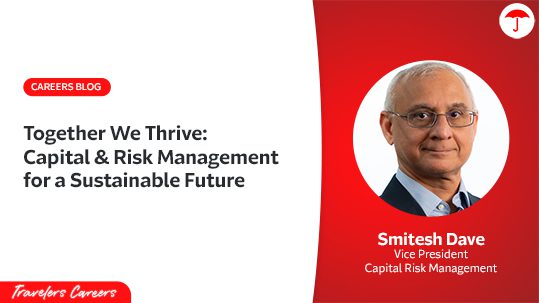
At Travelers, risk management isn’t just about minimizing uncertainty – it’s about ensuring the company remains strong, sustainable and able to meet its commitments to both policyholders and shareholders. Smitesh Dave, Vice President of Capital Risk Management, shares how his team’s work within Enterprise Risk Management (ERM) plays a critical role in shaping our company’s financial future.
“A key function of ERM is determining the capital required to support our business and allocating that capital to each of the products we sell, based on the risk quantification,” Smitesh explains. His work involves collaborating with subject-matter experts in our company to identify, measure and manage risks. These insights help Travelers maintain financial stability while ensuring our products are priced appropriately.
Risk management at Travelers is deeply tied to our company’s sustainability efforts. Holding the right amount of capital ensures that the company can fulfill its promises to policyholders, maintaining trust and long-term viability. Smitesh notes, “If our capital is insufficient and we can’t make good on our promise to policyholders and claimants, we’ll be out of business. In other words, we won’t be sustainable.”
Risk governance starts with identifying potential risks across the company, followed by quantification to determine the necessary capital to cover them. Given that some insurance claims may take years to settle, modeling all possible financial outcomes for our business is essential.
Looking to the future, Smitesh’s team also plays a role in assessing emerging risks, such as those posed by advancements in AI. As generative AI continues to evolve, Travelers must carefully balance the risks and opportunities it presents.
“As part of our ERM responsibility, we need to identify the risks that GenAI brings to the table and make sure that we are mitigating and managing those risks appropriately,” Smitesh states. However, he also acknowledges the potential benefits that AI can offer in enhancing our company’s operations.
Ultimately, our ability to quantify and manage risk is what allows Travelers to remain strong and adaptable. By doing so, we not only meet the financial expectations of our shareholders but also guarantee that we can continue providing reliable coverage to our policyholders, both now and in the future.
SUBSCRIBE TO GET OUR LATEST BLOGS
Want to stay up to date? Have stories sent directly to your email inbox.
